Fleet Tech's 2026 Reset: Mobile-First Apps and a Consolidation Wave Reshape the Market
Blues unveiled a device-to-cloud system at MATS, Fleetio linked up with Motive, and Wex grabbed Trucker Path -- all in a single quarter. Here's what the 2026 reshuffle means for fleet buyers.
Mobile-First Is the New Baseline -- Not a Nice-to-Have
Fleet managers have asked the same question for a decade: why does running a fleet still require a desk? In early 2026, the industry finally answered. Fleetio shipped a dedicated mobile app built for operators in the yard, the shop, and the cab -- not a stripped-down web view. The bar has shifted from mobile-friendly to mobile-native.
Blues pushed the story further at the Mid-America Trucking Show in March, unveiling a connected device-to-cloud system it pitched as the backbone for "the next wave of fleet management." It was one of the most talked-about reveals at MATS 2026, where software demos pulled crowds that once gathered around chrome.
The so-what for fleet leaders: anywhere-access is no longer a differentiator you pay extra for. It's table stakes, and any RFP that doesn't demand it in 2026 is already behind.
The Partnership Play: Vendors Admit They Can't Do It Alone
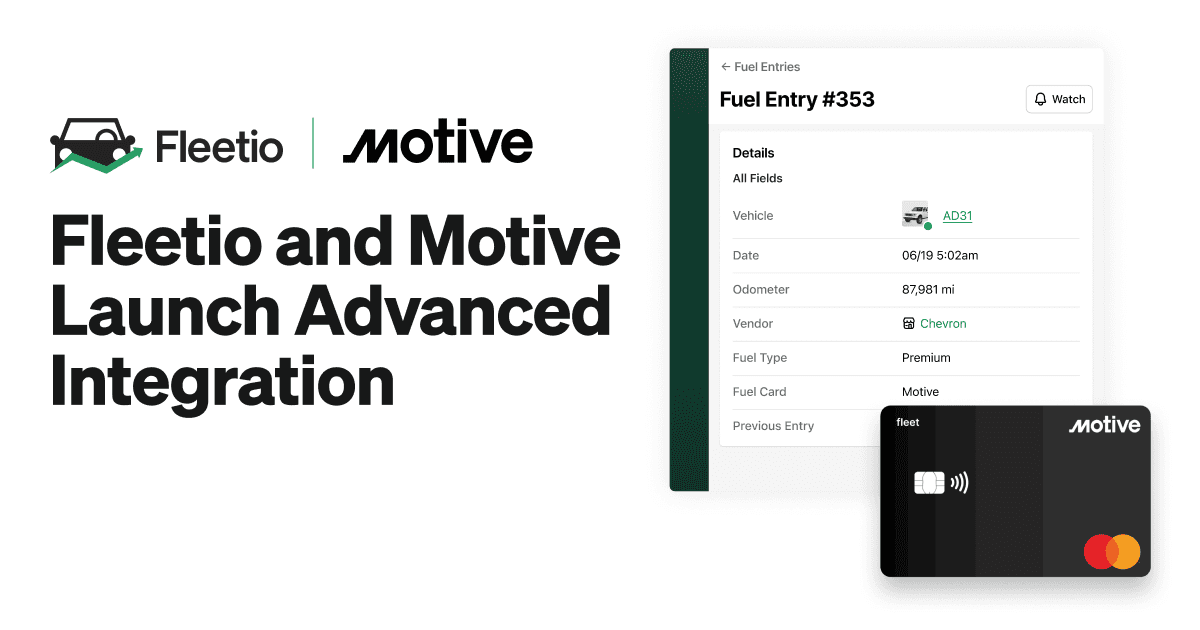
Integration is the word of the year. In February, Fleetio and Motive announced a joint maintenance-and-optimization platform that marries preventive scheduling with live vehicle telemetry -- two data sets that have lived in separate tabs for far too long. Days later, Wex and Trucker Path linked fuel purchasing to driver workflow, betting that the real efficiency gains sit at the seams between systems.
The logic is blunt: fleets don't want five logins to run one operation. Vendors that can stitch together a unified view -- even through partnership rather than ownership -- are winning the deals. Those clinging to walled gardens are losing them.
Acquisitions Compress the Buyer's Shortlist
Consolidation is accelerating, and it's changing what fleet buyers will see on their shortlist next year. Larger platforms are buying capability rather than building it, which pulls integrated features to market faster -- but also thins the field of independent options.
Newcomers are still showing up. Andy Transport launched a fleet management and maintenance venture in January, and Hub International rolled out a fleet risk management app in February. Translation: the sector is attractive enough that acquirers and founders are both writing checks. For buyers, the practical takeaway is to vet vendor roadmaps now -- the logo on today's invoice may not be the one on next year's.
Kooner's FleetIQ Signals Where the Upgrade Race Is Headed
Established vendors aren't coasting. Kooner Fleet Management rolled out FleetIQ, explicitly targeting customer uptime -- the metric that now matters more than feature counts on a spec sheet. Across the sector, first-quarter product releases came faster than any quarter in recent memory.
The competitive pressure is real, and it cuts in the buyer's favor. Fleets evaluating software today are comparing capabilities -- predictive maintenance triggers, driver-workflow integrations, uptime SLAs -- that didn't exist six months ago. The advice for ops leaders managing 50 to 5,000-plus vehicles: revisit your stack annually, not every three years. The market isn't waiting.