EV Fleet Management on Track for $32B by 2030 as IoT Compounds
MarketsandMarkets pegs EV fleet management at $32.25B by 2030, growing 22.7% a year. The story isn't just the vehicles -- it's the telematics and IoT layer fleets are buying alongside them.

The $32 Billion Number, in Context
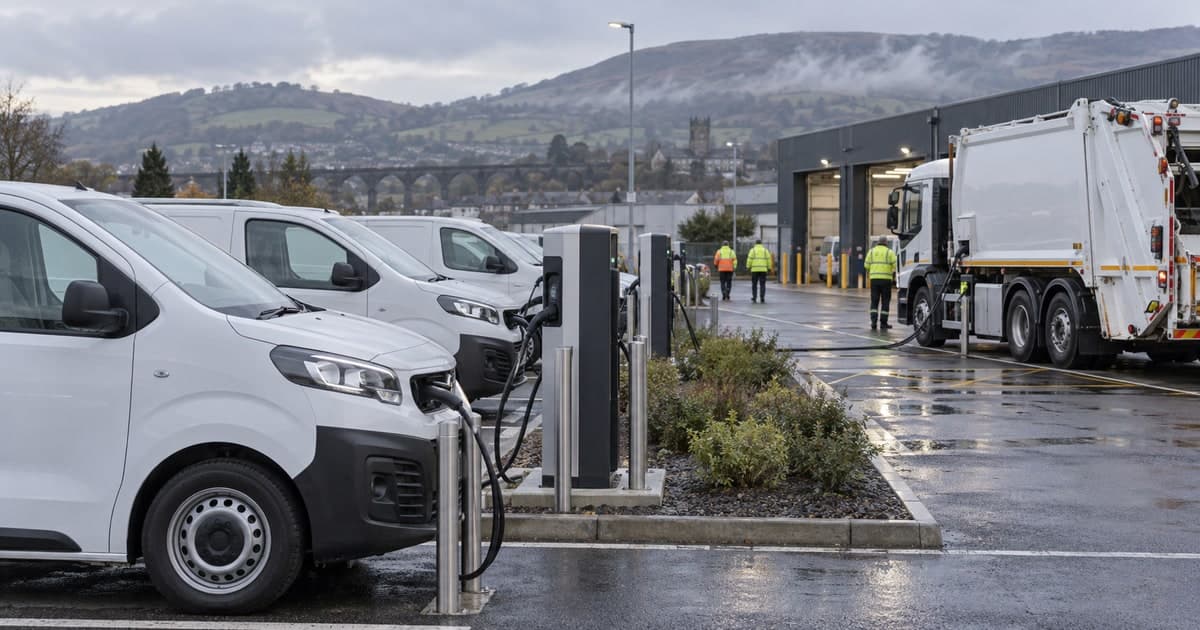
MarketsandMarkets is now projecting the EV fleet management market will hit $32.25 billion by 2030, growing at a 22.7% compound annual rate from 2025. That's a number large enough to attract every adjacent vendor in software, charging, and energy management -- which is why this category looks crowded even though the underlying fleet electrification curve is still early.
The headline figure is less interesting than the composition. EV fleet management isn't a single product; it's a stack: vehicle telematics, charge scheduling, energy procurement, route optimization, battery health, and resale. Different segments are growing at different rates, and the winners are the platforms that can credibly stitch the layers together.
The Broader Fleet Market Is Compounding Quietly
The non-EV side of fleet management is growing too, just less dramatically. Global Growth Insights pegs the fleet management solution market at an 8% CAGR, while Market.us has the broader category at 10.6%. Fortune Business Insights extended the projection horizon to 2034, and MarketsandMarkets published a separate forecast for bus and public-transit fleet management covering 2025-2030.
What's notable is the consistency. Multiple research firms with different methodologies are landing on the same range -- somewhere between high-single-digits and low-double-digits annually. That's a real category, not a hype cycle.
IoT Is the Connective Tissue
Almost every report names the same growth driver: IoT and connected vehicle monitoring. Sensors on the truck, telematics gateways, charging infrastructure, and the platforms that pull them together. Teletrac Navman, Geotab, and Fleet Complete are positioned as primary beneficiaries, with Motive (now headed for the public markets) drawing detailed coverage from Tech.co this month.
For fleet operators, the practical implication is that the lines between "telematics provider" and "fleet management platform" are blurring fast. The vendors that started as hardware-and-tracking are climbing the stack into workflow and AI; the vendors that started in software are buying or building hardware.
Diesel Volatility Forces a Cost Conversation
Underneath the long-term growth story, fleet operators are dealing with a much more immediate problem: diesel price volatility. Heavy Duty Trucking ran a useful interview with Breakthrough Fuel's Jenny Vander Zanden on near-term savings tactics, while Automotive Fleet collected practical tips from working fleet managers on policy, routing, and driver guidance.
The savings playbook hasn't changed dramatically -- it's still policy enforcement, route discipline, and driver coaching -- but the technology to execute on it has gotten substantially better. Fleets that already have a telematics layer are well-positioned to act on the volatility; the ones still operating on monthly fuel-card statements are not.