Siemens Uses Telematics to Match EVs to Jobs Across 8,000 Vehicles
Siemens says it has put more than 4,000 EVs into service across a U.S. fleet of over 8,000 vehicles. Its fleet team is using job matching, telematics and replacement-cycle changes to make the transition workable.
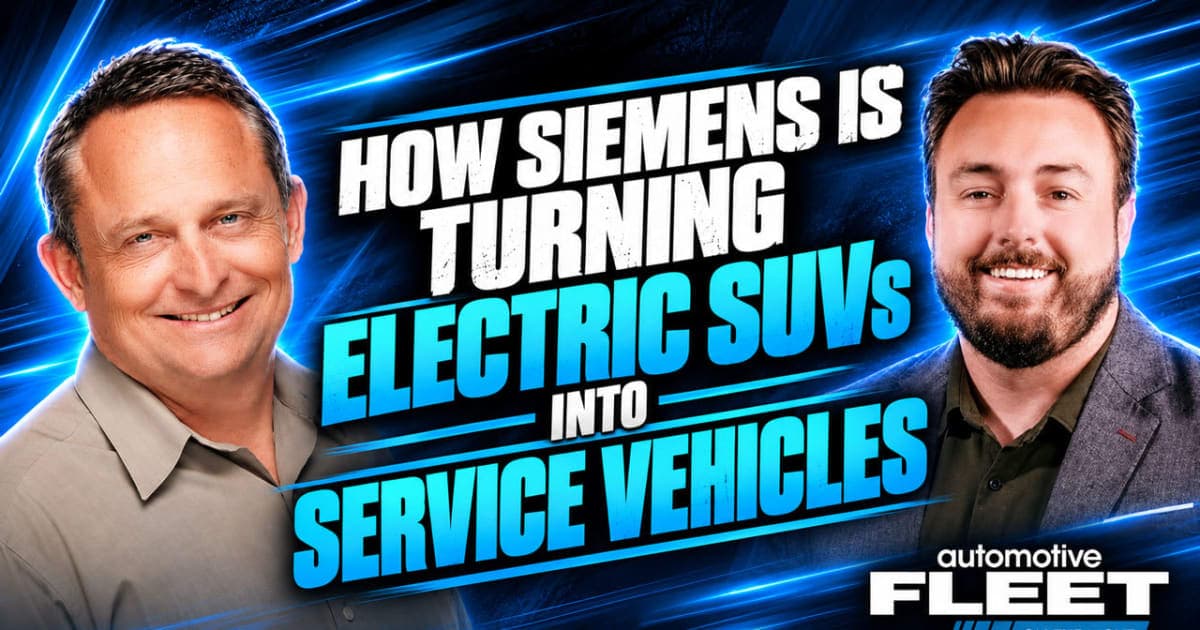
Siemens has more than 4,000 electric vehicles in operation across a U.S. fleet of over 8,000 vehicles, according to a new Automotive Fleet interview with U.S. fleet manager Matt Balfour. The scale makes the program less about a single vehicle purchase and more about fitting vehicles, charging and work requirements together.
Start with the work, not the badge
Balfour described vehicle selection as a job-matching exercise. The fleet is using telematics to understand range needs and driver behavior, then pairing EVs with duties they can actually cover. That approach matters for a multi-division operation where a vehicle used for local service calls does not have the same charging window, payload or upfit requirements as a vehicle covering longer routes.
The team is also looking at replacement cycles as part of the total-cost equation rather than treating electrification as a one-for-one swap at the end of a conventional vehicle's life. Home charging, upfitting needs and the limited availability of suitable medium-duty EVs remain part of the operating constraint.
Telematics makes the decision more specific
The useful role for telematics is not simply showing that a vehicle drove fewer miles than expected. It is giving fleet staff a defensible view of daily distance, dwell time, charging opportunity and driving pattern before they commit a vehicle to a different powertrain. That can keep a promising EV program from being judged on assignments it was never designed to handle.
What fleet teams can take from it
For fleets expanding beyond an initial EV pilot, Siemens' approach is a reminder to make the selection case vehicle by vehicle. Identify the duty cycle, confirm where the vehicle will charge, account for the upfit and set a review point after deployment. The result is a fleet plan built on operating evidence rather than an electrification target alone.