West Coast Governments Plan ZEV Truck Corridor
California, Oregon, Washington, British Columbia and Baja California are coordinating a BC2BC corridor for battery-electric and hydrogen trucks. The initial plan includes 20 charging stations and three hydrogen fueling stations along a route used by nearly 10,000 trucks a day.
Five Jurisdictions Line Up Around I-5
California, Oregon, Washington, British Columbia and Baja California are coordinating a zero-emission truck corridor meant to support battery-electric and hydrogen fuel-cell trucks moving between Canada, the U.S. and Mexico.
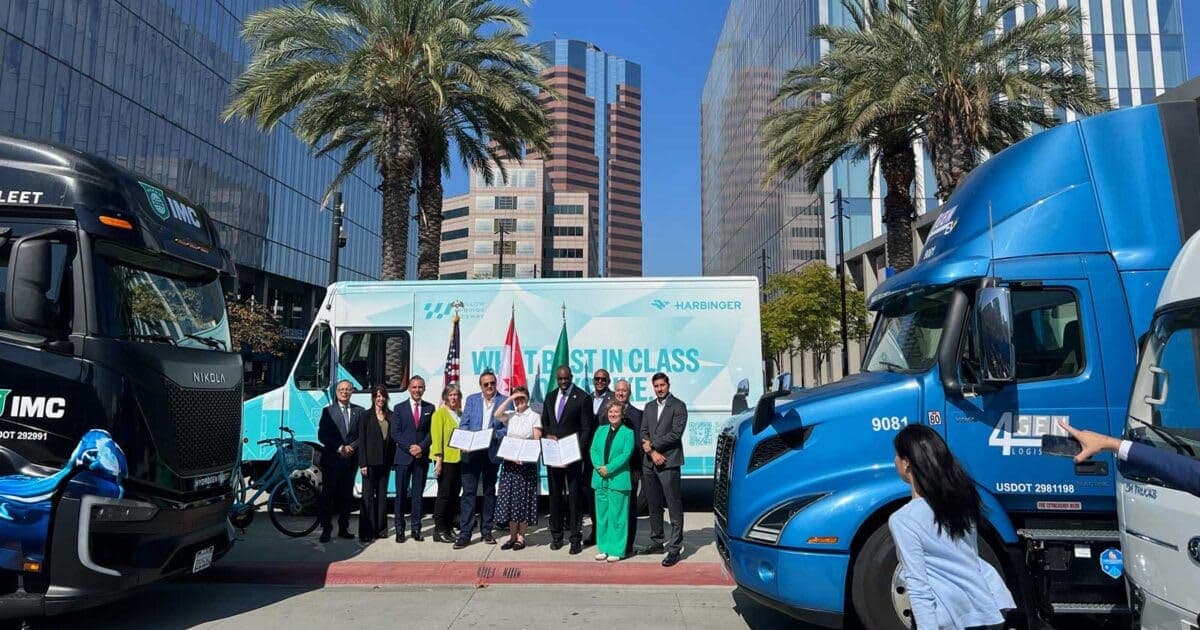
The British Columbia to Baja California ZEV Corridor, known as BC2BC, was announced Aug. 26 at the Port of Long Beach. The route centers on the West Coast freight spine that includes I-5 in the U.S. and would eventually connect Vancouver, British Columbia, with Baja California, Mexico.
Charging and Hydrogen Are Both in the Plan
The initial buildout is expected to include 20 electric truck charging stations and three hydrogen fueling stations. Nearly 10,000 trucks travel the corridor on an average day, according to the project announcement.
The participating governments said they will coordinate technical standards, infrastructure planning and related requirements so trucks can use charging and fueling assets across state, provincial and international boundaries. That cross-border piece matters because a corridor is only as useful as its weakest stop.
Why Fleets Should Watch It
The launch event included Volvo Group North America, Southern California Edison, Tesla, EV Realty and King Fio Trucking, with zero-emission trucks from IMC Logistics, 4Gen Logistics, Volvo, Tesla and ZM Trucks on display.
For fleets, the practical question is not whether a zero-emission truck can handle a single route. It is whether charging or fueling will be available often enough, consistently enough and under compatible standards to keep equipment working. BC2BC is still a planning effort, but it gives regional and long-haul operators a clearer signal about where West Coast infrastructure dollars and standards work are headed.