ADAS Cuts Claims but Raises Repair Downtime Risk
IIHS/HLDI data covered by Automotive Fleet shows ADAS-equipped vehicles had about 10% higher collision claim severity but lower claim frequency, shifting attention to downtime and calibration planning.
Fewer Crashes, Higher Repairs
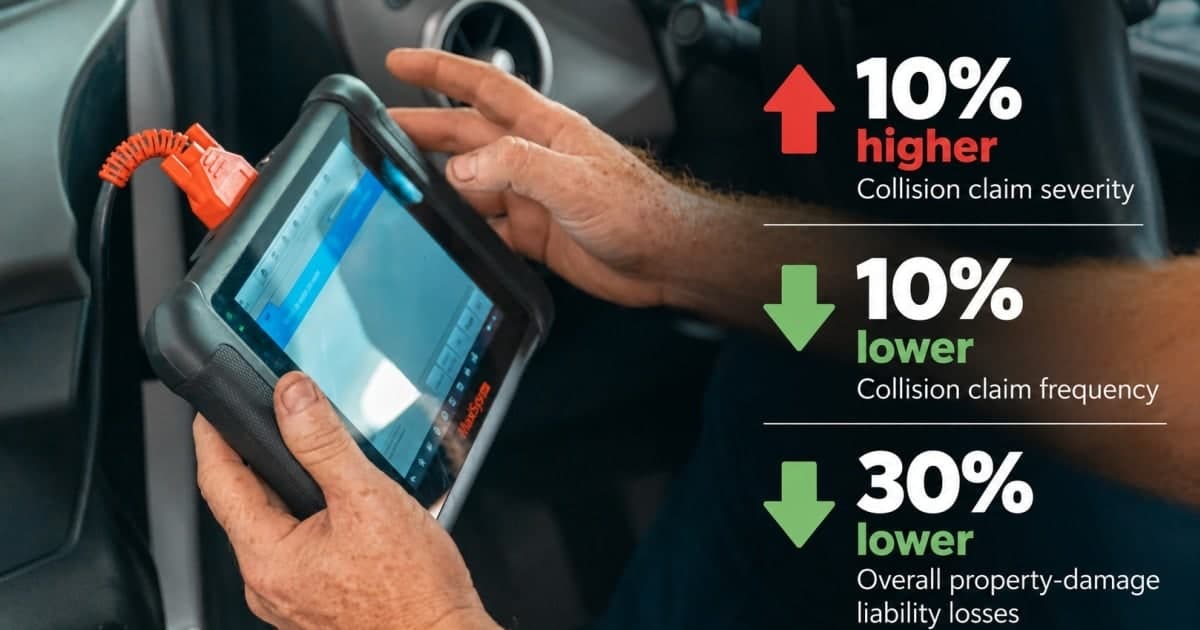
ADAS-equipped vehicles are changing fleet crash economics. Automotive Fleet, citing IIHS and HLDI analysis, reported that collision claim severity was about 10% higher for vehicles equipped with a bundle of advanced driver assistance features.
The same analysis found that those vehicles crashed less often. Collision claim frequency was about 10% lower, and property damage liability claim frequency was nearly 40% lower. After frequency and severity were combined, overall losses were about 5% lower for collision coverage and nearly 30% lower for property damage liability coverage.
Why the Repair Order Gets Larger
The added repair cost comes from the equipment built into modern vehicles. Bumpers, mirrors, windshields, and fascia can house cameras, radar, sensors, wiring, and other systems tied to automatic emergency braking, blind spot detection, and lane-departure alerts.
Automotive Fleet reported that an individual sensor can cost $300 to $1,000. A bumper repair that might once have cost about $2,000 can reach $2,500 to $3,000 after cameras, wiring, and calibration are included. IIHS also noted that average vehicle repair prices have risen more than 40% since 2020.
Downtime Is the Fleet Variable
For fleets, the repair invoice is only part of the issue. Parts delays can sideline otherwise drivable vehicles, especially when safety-related mirrors or sensors are backordered. Automotive Fleet reported that some waits can stretch three to five months.
Calibration adds another bottleneck. Some ADAS procedures need clear, well-lit space in front of the vehicle, specialized equipment, or a dealership handoff. That makes repair-network planning part of the safety case, not a post-crash administrative task.
What to Track Now
The practical takeaway is to measure ADAS on both sides of the ledger. Track claim frequency, injuries, severity, downtime days, parts availability, and calibration cycle time. Avoided crashes do not show up as a line item, but unavailable vehicles do.