ChargePoint Report Shows Charging Demand Outrunning Ports
ChargePoint says charging sessions on its network rose 34% in 2025 while vehicles on the road rose 16%, a gap that pushes fleet infrastructure planning ahead of vehicle orders.
Use Is Growing Faster Than the Fleet
ChargePoint's 2026 Charging Forward Report, covered by Automotive Fleet, says charging sessions on the company's network increased 34% in 2025 while vehicles on the road increased 16%.
ChargePoint also said more than 1 million drivers now use its network monthly, and that charger use grew faster than the addition of new charging ports. The company expects that gap to continue in 2026.
Fleet Planning Starts Before the Vehicle Order
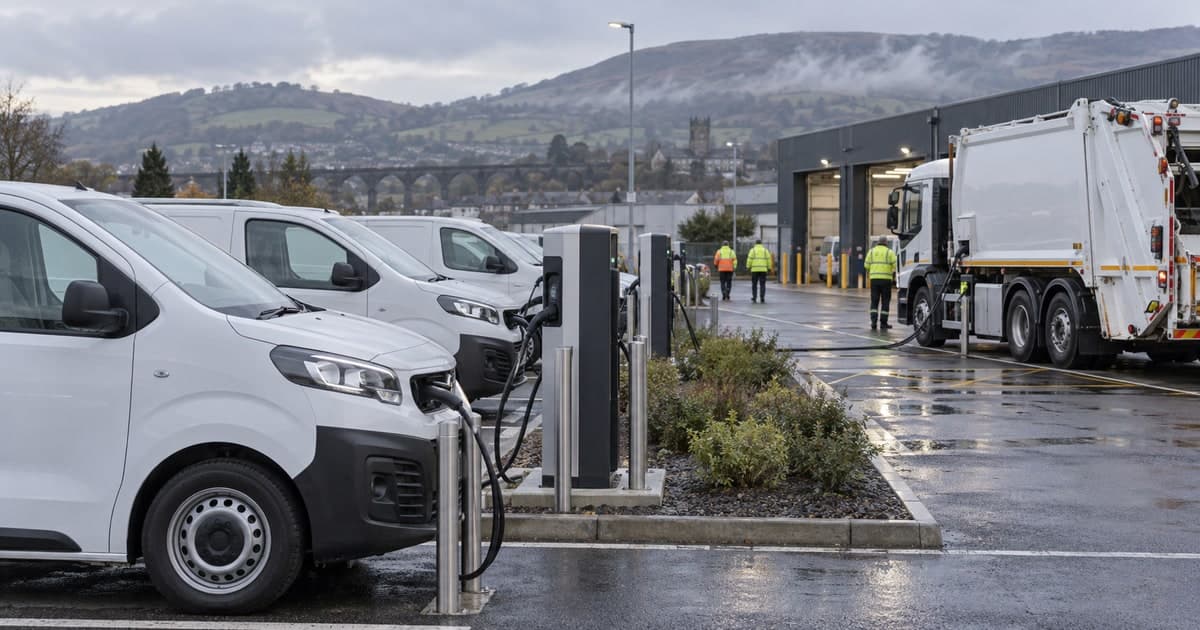
For fleet operators, the finding turns charging from a facilities afterthought into an early replacement-cycle question. Charging capacity, dwell time, route length, facility power, utility coordination, and expected fleet growth all affect whether EVs can stay available for daily work.
Commercial trucks and vans are expected to keep moving toward electric powertrains where operators can make the total-cost math work. But the infrastructure side has to be sized around duty cycle, not just the number of plugs on a site plan.
Higher Power and Energy Management
Automotive Fleet noted that ChargePoint is pointing to higher-powered charging as one answer. The report highlights a Level 2 architecture capable of up to 19.2 kW in North America and an Express Solo DC fast charger rated up to 600 kW, with power distribution across as many as four vehicles.
The broader point is operational, not just electrical. As vehicles, batteries, and charging windows change, fleets may need infrastructure that can handle more power, schedule charging around energy costs, flag charger faults, and eventually support bidirectional use such as vehicle-to-grid or facility backup power.
Uptime Becomes a Dispatch Metric
ChargePoint reports 98% station uptime among customers using its Assure and Assure Pro service programs. That is a vendor-specific figure, but it frames the fleet issue cleanly: a charged vehicle is only useful if the charger works when the route schedule needs it.