Trucking Volumes Hit 4-Year High as Iran Conflict Disrupts Operations
Strong freight demand meets new challenges as geopolitical tensions drive fuel costs higher and increase cybersecurity risks across the industry.
Market Fundamentals Show Strength Despite External Pressures
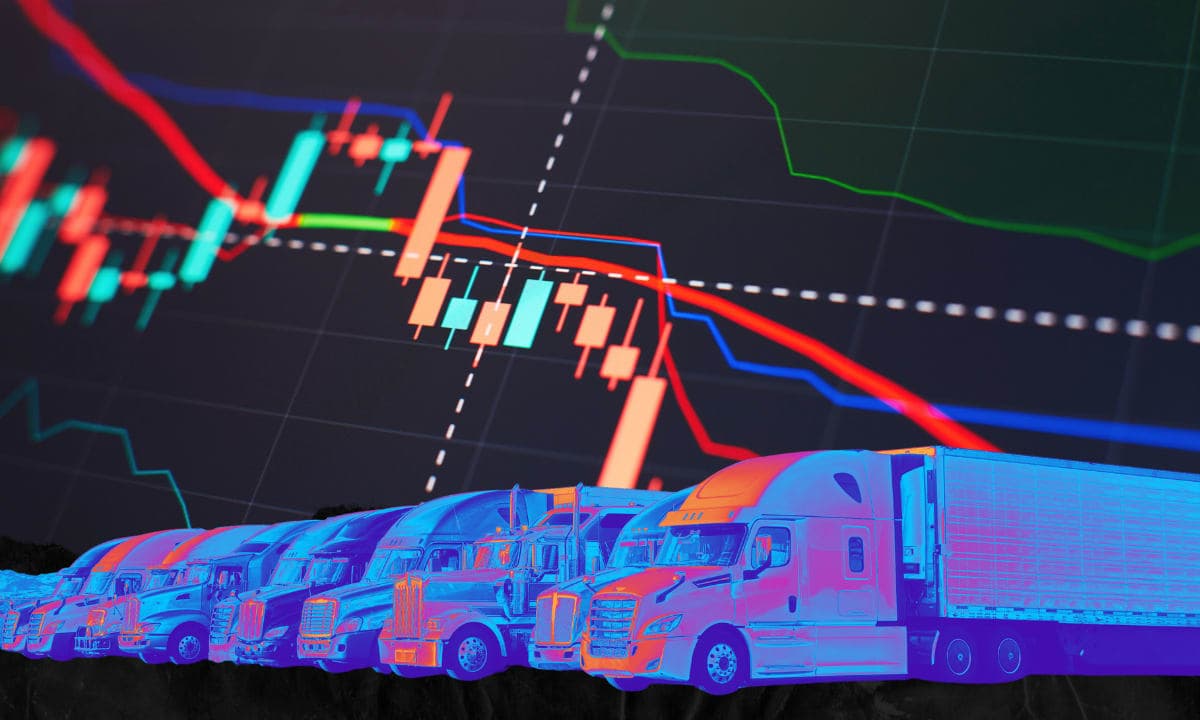
The trucking industry is experiencing a tale of two realities in early 2026: robust freight volumes hitting four-year highs while external disruptions threaten to undermine operational stability. According to recent data from ACT Research, trucking volumes have reached their highest levels since 2022, with the supply-demand balance strengthening significantly across most segments.
This volume surge represents a meaningful shift for an industry that has weathered considerable volatility over the past several years. Fleet managers are reporting tighter capacity conditions, which typically translates to improved pricing power and better utilization rates for trucking companies. The strengthening fundamentals suggest that underlying economic demand for freight transportation remains solid, providing a foundation for potential profitability improvements.
However, the positive volume trends are being tempered by rising operational costs, particularly fuel expenses that have climbed substantially due to geopolitical tensions. While some tariff relief measures had initially provided cost benefits to carriers, these gains are being rapidly eroded by higher oil prices stemming from the ongoing conflict involving Iran.
Iran Conflict Creates Multi-Layered Operational Challenges
The geopolitical situation involving Iran is impacting trucking operations far beyond the pump price. Fleet operators are grappling with a complex web of challenges that extend from fuel cost volatility to increased security threats that many industry veterans have never encountered.
Diesel price fluctuations have become more pronounced and unpredictable, making it difficult for fleet managers to accurately forecast operating costs and set competitive rates. The pricing volatility is particularly challenging for smaller carriers that lack the financial resources to hedge fuel costs or absorb sudden price spikes. Many fleets are having to revisit their fuel surcharge strategies and contract terms to account for the increased uncertainty.
Perhaps more concerning for fleet operations is the emergence of new fraud schemes and cybersecurity threats that appear to be connected to the broader conflict. Industry security experts are reporting an uptick in sophisticated cyberattacks targeting transportation companies, ranging from ransomware attempts to more subtle data infiltration efforts. These digital threats represent a new frontier for an industry that has traditionally focused on physical security concerns.
Fleet managers are being advised to enhance their cybersecurity protocols, including employee training programs and system monitoring capabilities. The threats are particularly acute for companies that have rapidly digitized their operations in recent years, as expanded digital footprints can create more potential attack vectors.
Technology Integration Advances Amid Security Concerns
Despite the challenging external environment, technology adoption continues to advance across the industry, with safety and operational efficiency remaining key priorities for fleet managers. A notable development in the autonomous trucking space shows how companies are working to integrate advanced safety systems into next-generation platforms.
Kodiak Robotics has integrated HAAS Alert's Safety Cloud platform into its autonomous vehicle control system, enabling real-time digital hazard alerts to be transmitted to nearby motorists. This integration represents a significant step forward in vehicle-to-everything (V2X) communication technology, allowing autonomous trucks to actively communicate their presence and intentions to surrounding traffic.
The Safety Cloud integration allows Kodiak's autonomous trucks to send digital alerts about their presence, movements, and potential hazards to other vehicles equipped with compatible systems or navigation apps. This capability addresses one of the key public acceptance challenges for autonomous trucking by providing an additional layer of communication between self-driving trucks and human drivers.
For fleet managers evaluating autonomous trucking technologies, these types of integrated safety systems are becoming increasingly important differentiators. As the technology moves closer to commercial deployment, the ability to seamlessly communicate with existing traffic infrastructure and other vehicles will be crucial for both safety and regulatory approval.
Strategic Implications for Fleet Operations
The current market dynamics present both opportunities and challenges that require strategic thinking from fleet managers. The combination of strong freight volumes and tighter capacity should theoretically support rate improvements, but the benefits may be offset by higher operating costs and increased operational complexity.
Fleet managers should be prepared for continued fuel price volatility and factor this uncertainty into their planning processes. This may include revisiting fuel surcharge mechanisms, exploring alternative fuel options where feasible, and potentially adjusting route optimization strategies to minimize fuel consumption.
The cybersecurity threat landscape requires immediate attention from fleets of all sizes. Companies should conduct comprehensive security audits of their digital systems and ensure that cybersecurity considerations are integrated into technology adoption decisions. This includes evaluating the security protocols of third-party technology providers and ensuring that connected vehicle systems have appropriate protections.
Looking ahead, the integration of advanced safety technologies like V2X communication systems may become not just competitive advantages but regulatory requirements. Fleet managers should stay informed about these developments and consider how emerging technologies might fit into their long-term operational strategies.
The current environment underscores the importance of operational flexibility and risk management in fleet operations. Companies that can effectively navigate the dual challenges of capitalizing on strong freight demand while managing new types of operational risks will be best positioned for success in this evolving landscape.