Venti Plans 130 Autonomous Yard Trucks Across U.S. Rail Sites
Venti Technologies says a Class I intermodal railroad plans to deploy more than 130 autonomous container-moving trucks across eight U.S. sites by 2027. The work is intended for live-yard moves, not a dedicated-lane demonstration.
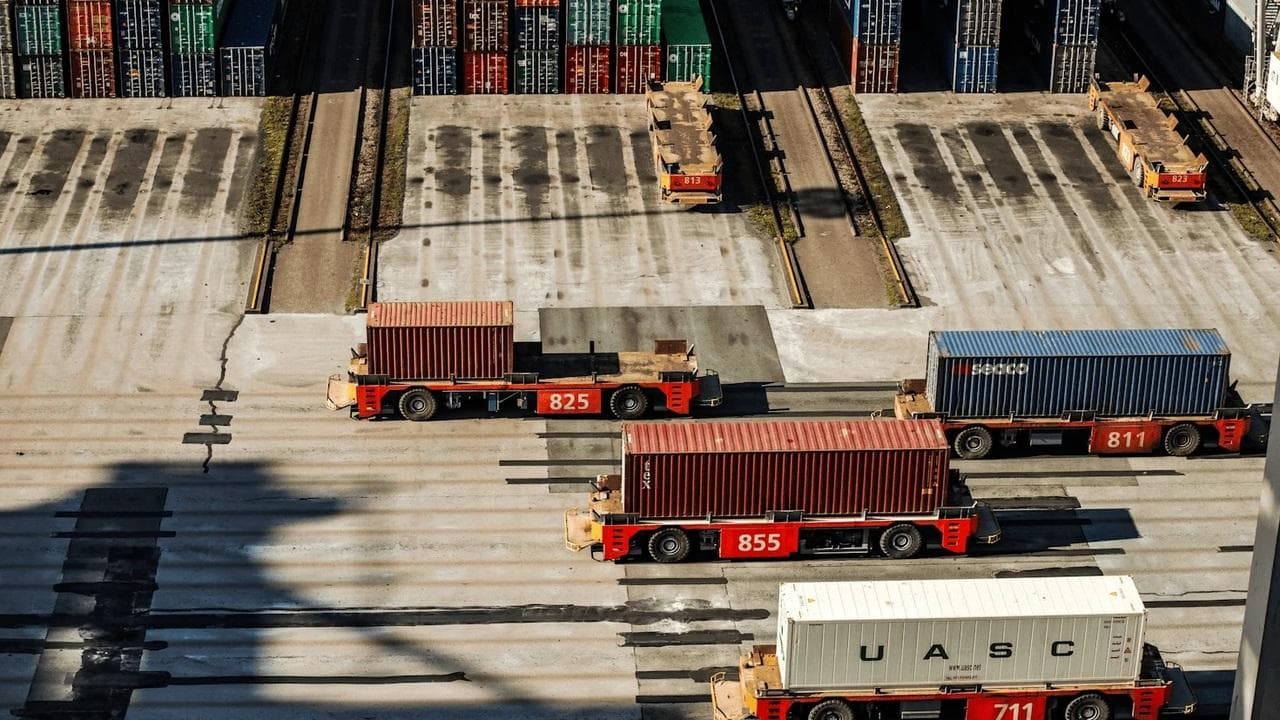
Venti Technologies says a Class I intermodal railroad plans to deploy more than 130 autonomous container-moving trucks across eight U.S. sites by 2027.
The Boston company has operated driverless container trucks at PSA Singapore for nearly three years. Its U.S. plan is more demanding: the vehicles are being prepared to move containers in active rail yards, where they must work around cranes, trains, forklifts and people without dedicated lanes.
From a port loop to a rail-yard workflow
Venti's Singapore operation did not require its tractor-trailer vehicles to back up. The company told FreightWaves that U.S. sites required it to develop articulated backing and track-crossing capability before the rollout.
The expected work is the short movement of containers between trackside and storage areas. The railroad and Venti have not identified the rail operator or released commercial terms, and the U.S. fleet has not yet begun operating.
Deployment grows from a small proof of concept
According to Venti, the railroad first evaluated two vehicles in a three-month proof of concept. The company says that agreement developed into a longer-term rollout plan, with a potential fleet of more than 600 vehicles by the end of the decade.
Those figures are company projections, not a completed deployment. They are still notable because the intended operating environment is a live intermodal yard rather than a controlled test route.
What fleet and yard operators should watch
Autonomous-yard programs rise or fall on the details around vehicle routing, trailer backing, safe interaction with people and conventional equipment, remote support, and recovery procedures when a move cannot continue. Operators considering similar systems should distinguish a planned fleet expansion from proven local operating performance, then evaluate the workflow, safety case and labor plan at each site.