Speed Cameras Turn Work Zones Into Fleet Policy
Fleet Management Weekly says at least 19 states now authorize speed cameras in highway work or construction zones, creating a state-by-state compliance problem for national fleets.
A State-by-State Enforcement Map
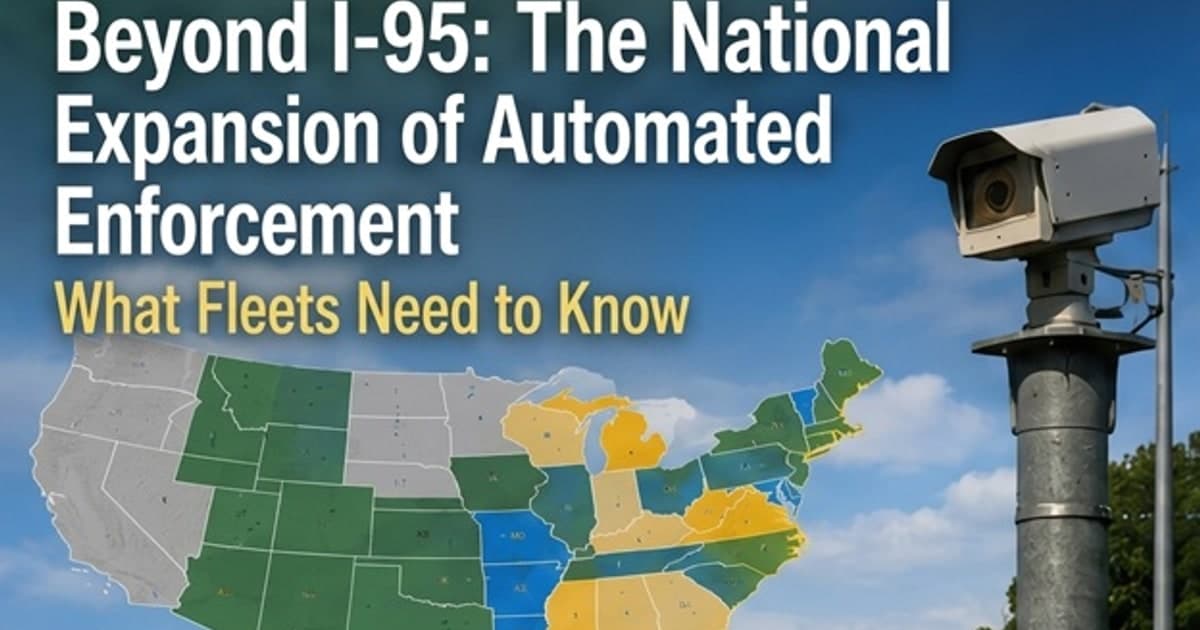
Automated work-zone speed enforcement is becoming a fleet issue without becoming one national program. Fleet Management Weekly reports that, as of 2026, at least 19 states authorize speed cameras in highway work or construction zones, while nine states prohibit automated speed cameras.
That split matters because national fleets do not operate one policy at a time. The same vehicle can move from a state with work-zone cameras into a state that bans them, then into a state that allows cameras only in narrower settings such as school zones or limited pilots.
Rules Differ Before the Citation Arrives
The Fleet Management Weekly piece notes that authorized states include Arkansas, California, Colorado, Connecticut, Delaware, Illinois, Indiana, Iowa, Kentucky, Louisiana, Maryland, Michigan, Minnesota, New York, Oregon, Pennsylvania, Vermont, Virginia and Washington.
The bigger operational problem is that programs do not work the same way. Warning periods, trigger speeds, fine schedules, worker-presence rules and owner-liability standards can all differ. For fleets, that means a notice may land with the company even when the driver, route, agency portal and violation rules vary by jurisdiction.
Turn Camera Notices Into Policy Data
The practical response is not just paying tickets faster. Fleet teams should map where their vehicles regularly cross camera-authorized work zones, check how citation responsibility is assigned, and make sure telematics, dispatch and driver coaching data can support reviews when a notice arrives.
Work-zone enforcement is also a safety signal. Repeat camera events can point to route pressure, driver behavior, poor speed-governance habits or missing policy communication. The fleets that treat camera notices as a data source, not just a payable, will have a cleaner path to reducing both risk and administrative drag.